
・Displays planets and points as symbols / Zodiac signs as a band / Calculates astronomical reference points
・Performs position calculations and visualizations, but does not engage in astrology itself.
・Zodiac boundaries are based on the Pleiades at 2336 B.C. (switchable).
・Orbits of the four major asteroids are sampled from around the year 1980.
※ This feature is still under development. Thank you for your understanding.

・Coordinates are converted to ecliptic latitude and longitude.

In the [QUERY] section, there are [HSC] and [WL0] buttons.

・The [HSC] button retrieves coordinate information.
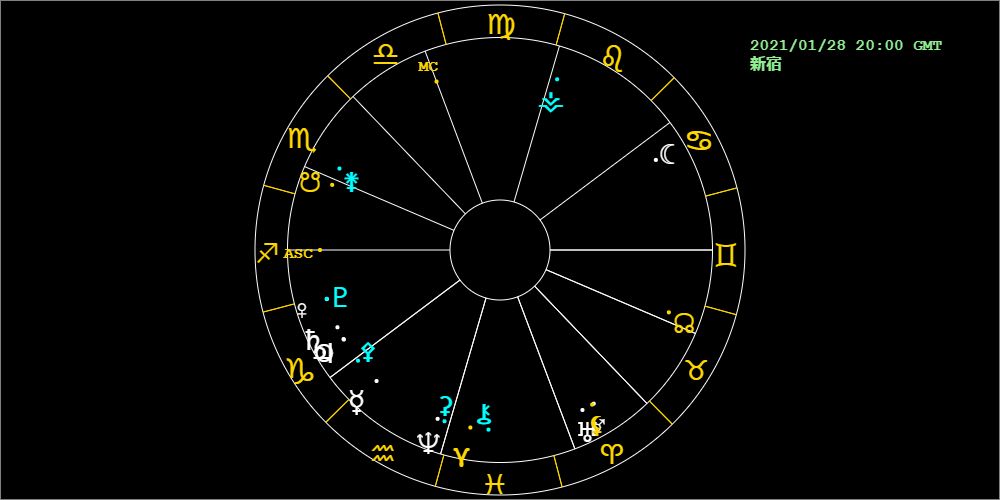
・Pressing the [HSC] button again displays the horoscope view.
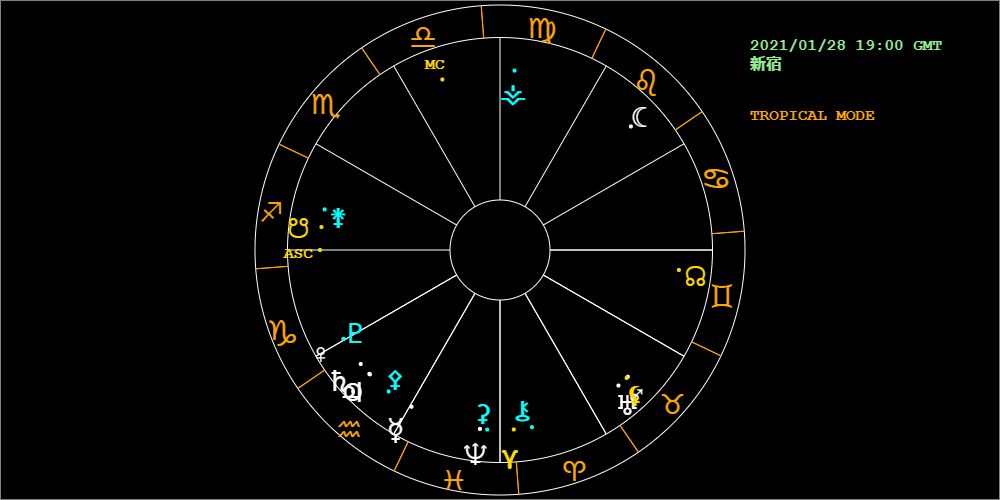
・The [WL0] button toggles the wheel/house display.
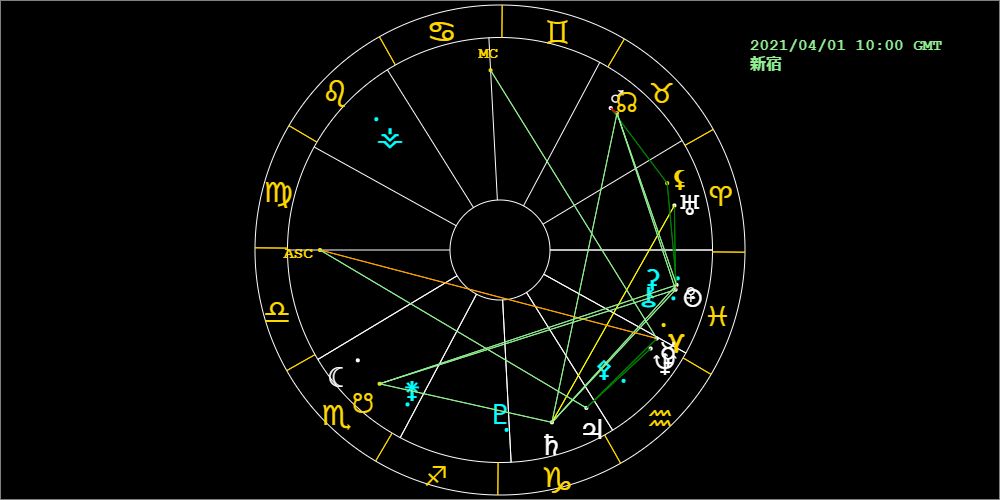
・Pressing the [HSC] button again shows aspect lines.
About the Pleiades in 2336 B.C.
・Calculating the vernal equinox for 2336 B.C.:
1) Just before dawn, Alpha Arietis (α Ari) rises almost exactly due east.
2) The coordinates of the Pleiades (Eta Tauri) align with 0° ecliptic longitude (the vernal point).
3) Constellation boundaries are defined based on these stars and the horizon (drawing horizontal lines to the ecliptic).
・Precession from that time to the present is calculated to determine current boundaries.
※You can set any star as the reference point (preferably near the ecliptic, with or without proper motion)
※Tropical system is also selectable
・Symbol Reference #1
| Zodiac Signs |
|---|
| ♈ ♉ ♊ ♋ ♌ ♍ ♎ ♏ ♐ ♑ ♒ ♓ |
| The 12 constellations along the Sun’s apparent path as seen from Earth |
・Symbol Reference #2
| Symbol | Name | Description | Year Discovered |
|---|---|---|---|
| ☉ | Sun | Center of the solar system | - |
| ☾ | Moon | Earth’s natural satellite | - |
| ☿ | Mercury | Planet | - |
| ♀ | Venus | Planet | - |
| ♂ | Mars | Planet | - |
| ♃ | Jupiter | Planet | - |
| ♄ | Saturn | Planet | - |
| ♅ | Uranus | Planet | 1781 |
| ♆ | Neptune | Planet | 1846 |
| ♇ | Pluto | Reclassified as a dwarf planet | 1930 |
| ⚳ | Ceres | Upgraded from asteroid to dwarf planet | 1801 |
| ⚴ | Pallas | Asteroid | 1802 |
| ⚵ | Juno | Asteroid | 1804 |
| ⚶ | Vesta | Asteroid | 1807 |
| ⚷ | Chiron | Asteroid… or comet? | 1977 |
・Symbol Reference #3
| Symbol | Name | Definition | Description |
|---|---|---|---|
| γ | Vernal Point | (Reference Point) | Used as the base for various calculations |
| ☊ | North Node (Dragon’s Head) | Ascending node of the Moon’s orbit | Solar and lunar eclipses occur near this point |
| ☋ | South Node (Dragon’s Tail) | Descending node of the Moon’s orbit | Solar and lunar eclipses occur near this point |
| ⚸ | Lilith (Dark Moon) | Lunar apogee | The point where the Moon is farthest from Earth |
※ Calculations are geocentric, so symbols may appear offset from the band center.
[HOME] - Star Simulator - Satellite Info -